Top Kitchen Layout Mistakes And How to Avoid Them
A beautifully designed kitchen can be the heart of a home, but even the most stylish kitchens can fall short if the layout is poorly planned. An ideal kitchen layout is crucial for efficiency and ease of use, and avoiding common design pitfalls can save you from daily frustrations.
Ignoring the Working Triangle
The working triangle is a fundamental principle in kitchen design that involves positioning the sink, hob, and fridge in a triangular layout. This design ensures that these key areas are easily accessible, reducing unnecessary movement and enhancing workflow.
How to Optimise the Sink/Hob/Fridge Layout
To optimise your working triangle:
Distance Matters: Keep the distance between the sink, hob, and fridge between 1.2 to 2.7 metres. This range allows for efficient movement without crowding.
Unobstructed Pathways: Ensure that there are no obstacles between these points. Avoid placing large appliances or furniture in the way.
Balanced Layout: Try to distribute the triangle evenly across the kitchen to maintain balance and accessibility.
Not Enough Counter Space
Counter space is essential for food preparation, and a lack of it can hinder your cooking process. Many homeowners underestimate the amount of counter space needed, leading to cluttered and inefficient work areas.
Tips for Maximising Prep Zones
Extend Countertops: Where possible, extend countertops to create more prep space.
Multi-Functional Islands: Use kitchen islands for additional workspace. Consider incorporating seating to double as a dining area.
Vertical Storage: Use wall-mounted shelves or racks to keep counters clear of clutter.
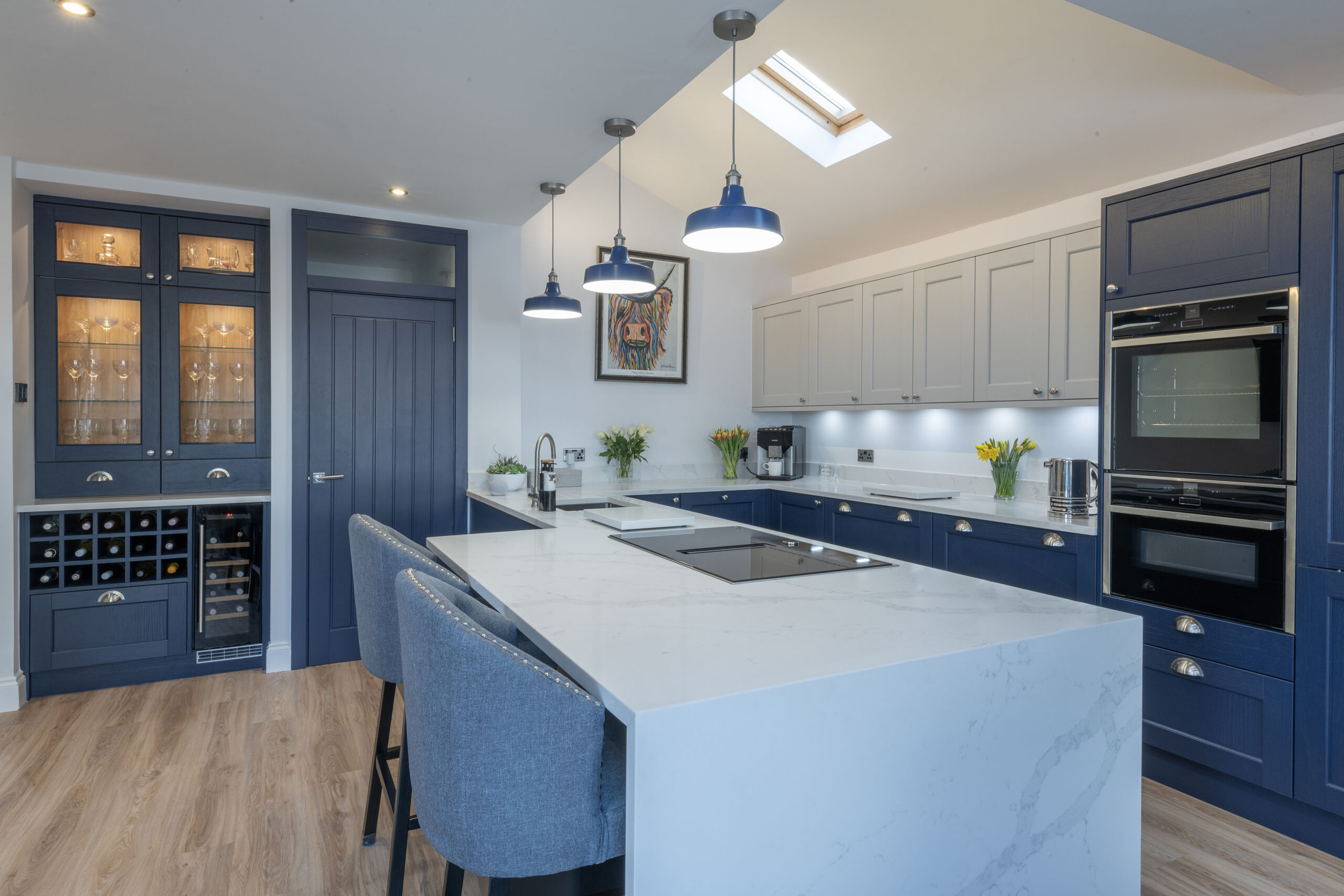
Poor Traffic Flow
A kitchen should allow for smooth movement, but poor traffic flow can lead to tight walkways and clashing doors, making the space feel cramped and uncomfortable.
Avoiding Tight Walkways and Clashing Doors
Plan for Movement: Ensure walkways are at least 1 metre wide to accommodate easy movement.
Door Placement: Consider the swing of doors and ensure they do not block pathways or other doors.
Open Plan Design: If possible, opt for an open-plan design to enhance flow and connectivity with other living spaces.
Skimping on Storage
Insufficient storage can lead to a cluttered kitchen, making it difficult to find and access items when needed. Effective storage solutions are key to maintaining an organised kitchen.
Pan Drawers > Cupboards; Corner Solutions
Pan Drawers: Opt for deep pan drawers instead of traditional cupboards for easier access and better organisation.
Corner Solutions: Use corner units with pull-out shelves or lazy Susans to maximise space.
Custom Cabinets: Consider custom cabinetry to fit your specific storage needs.
Not Planning for Real-Life Use
A kitchen should cater to your lifestyle and daily routines. Failing to plan for real-life use can result in impractical layouts that don’t meet your needs.
Seating, Bin Placement, Appliance Access
Seating: Incorporate seating that suits your family size and lifestyle, whether it’s a breakfast bar or a dining table.
Bin Placement: Place bins in convenient locations, ideally near the prep and cooking areas.
Appliance Access: Ensure that appliances are easily accessible and have sufficient clearance for operation.
Avoid layout regrets and create the kitchen of your dreams by addressing these common design mistakes. For personalised advice and a tailored solution, book a kitchen design consultation with our team today.
Categorised in: News